

Jaw Pain and Tension Can Affect More Than Just Your Mouth
TMJ dysfunction can influence how you eat, speak, concentrate, and manage daily stress. Jaw discomfort often extends beyond the joint itself, contributing to headaches, neck pain, facial tension, or difficulty opening and closing the mouth comfortably. At Apex Physiotherapy and Health Clinic, our physiotherapists support patients with TMJ dysfunction in Abbotsford, BC and Surrey, BC by identifying how jaw movement, muscle coordination, and posture contribute to symptoms.
Jaw pain rarely occurs in isolation. The jaw works closely with the neck, shoulders, and nervous system, which means symptoms often reflect a broader movement issue rather than a single joint problem. Effective care focuses on restoring coordinated movement and reducing strain through the jaw and surrounding structures.
Understanding TMJ Dysfunction and Why It Develops
The temporomandibular joint connects the jaw to the skull and allows for chewing, speaking, and facial expression. TMJ dysfunction occurs when this joint or the surrounding muscles don’t move smoothly or tolerate load well.
Contributing factors may include jaw clenching or grinding, prolonged stress, poor head and neck posture, previous dental work, neck injury, or altered movement patterns through the upper body. Over time, these factors can increase joint irritation and muscle tension, leading to pain or restricted movement.
How TMJ Dysfunction Can Affect Daily Life
TMJ symptoms often interfere with routine activities such as eating, yawning, or talking for extended periods. Some people notice clicking, popping, or locking in the jaw, while others experience facial pain, headaches, or ear-related discomfort.
Because jaw pain often fluctuates, people may change how they eat, avoid certain movements, or unconsciously tense surrounding muscles. These compensations can increase strain through the neck and shoulders and make symptoms more persistent, especially for individuals managing TMJ dysfunction in Abbotsford, BC and Surrey, BC.
How Physiotherapy Supports TMJ Dysfunction Recovery
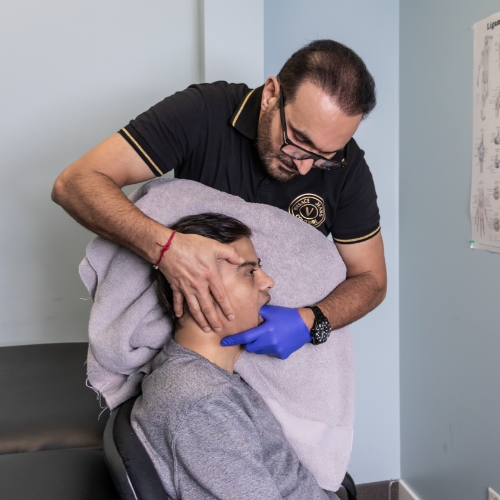
Physiotherapy for TMJ dysfunction focuses on improving jaw movement quality, reducing muscle overactivity, and restoring coordination between the jaw, neck, and upper body. Your physiotherapist completes a detailed assessment of jaw mobility, muscle tone, posture, and cervical movement to identify contributing factors.
Treatment may include:
- Jaw-specific movement retraining to improve control and reduce joint irritation during opening and closing
- Manual therapy to address joint stiffness and muscle tension affecting the jaw, neck, or upper shoulders
- Postural correction to reduce forward head positioning that increases jaw and neck strain
- Targeted exercises to support muscle balance and endurance around the jaw and cervical spine
- Education to address habits such as clenching, grinding, or prolonged tension during daily activities
Massage therapy may be included when facial, neck, or shoulder muscle tension contributes to jaw discomfort. By reducing protective muscle guarding, massage therapy can improve comfort and allow jaw movement exercises to feel more controlled and less reactive.
Each treatment is selected based on how it supports jaw function and reduces strain rather than masking symptoms.
Why Early Care for TMJ Dysfunction Matters
Ignoring jaw pain or relying solely on avoidance often allows tension and sensitivity to build. Early assessment helps identify movement and posture factors before symptoms become more persistent or spread to surrounding areas.
Guided physiotherapy supports gradual adaptation, helping the jaw tolerate normal daily tasks while reducing the likelihood of ongoing irritation.
Changes Patients Often Notice With Consistent Care
With structured TMJ-focused care, many patients experience:
- Improved jaw opening and closing without discomfort
- Reduced facial and jaw tension
- Fewer tension-related headaches
- Better neck comfort and posture
- Increased confidence with eating and speaking
Progress focuses on functional improvement and symptom control that supports daily comfort.

Frequently Asked Questions
Can TMJ dysfunction cause headaches or neck pain?
Is clicking or popping in the jaw always a problem?
Will I need to stop eating certain foods during treatment?
Why Patients Choose Apex Physiotherapy and Health Clinic for TMJ Dysfunction Care
Physiotherapists at Apex Physiotherapy and Health Clinic provide one-on-one care that looks beyond the jaw joint alone. Treatment plans address how posture, neck movement, and muscle coordination influence TMJ symptoms. Patients in Abbotsford, BC and Surrey, BC value care that’s thorough, individualized, and focused on long-term improvement.
Support Comfortable Jaw Movement Again
If jaw pain, tension, or clicking is affecting your comfort or concentration, the team at Apex Physiotherapy and Health Clinic can help you move forward with care focused on restoring jaw control and reducing strain. Take the next step toward more comfortable movement with a plan designed around how your jaw functions day to day.
Your Next Steps…
- Request An Appointment
- Receive A Custom Treatment Plan
- Work Hard and Progress In Your Recovery
- Recover & Enjoy Life Pain-Free